The New Era of Artificial Intelligence in Business
In recent years, artificial intelligence has gone from being a technological promise to becoming a real and accessible tool for companies of all sizes. What once seemed reserved for large corporations is now within the reach of SMEs, freelancers and professional teams looking to optimize their time and improve their performance.
In this context, solutions such as Claude, developed by Anthropic, are marking a before and after in the way we work. It is no longer just about automating tasks, but about transforming entire processes, streamlining decision-making, and freeing up key resources within the company.
Productivity, one of the great challenges in any organization, finds in AI a strategic ally. Reducing times, minimizing errors and focusing on what is really important – growing the business – is more viable today than ever.
At Ibercenter we see it every day: companies that adopt smart tools not only work better, but also gain in competitiveness. And in an increasingly demanding business environment, that advantage makes all the difference.
What is Claude and why is he on everyone’s lips?
In a business environment where efficiency makes the difference, tools such as Claude have burst onto the scene, positioning themselves as one of the most relevant artificial intelligence solutions of the moment. Developed by Anthropic, Claude is an advanced AI-based assistant designed to help professionals and companies manage information, generate content and optimize processes in an agile and secure way.
But what really makes it different, and why is it generating so much interest in the business world?
First of all, Claude stands out for his ability to understand and work with large volumes of information. Unlike other tools, it allows you to analyze large documents, summarize them accurately, and extract key insights in a matter of seconds. This is especially useful in industries where time spent reading, reviewing, or analyzing data is high, such as consulting, law, marketing, or business management.
In addition, its ability to generate high-quality texts makes it a strategic ally on a day-to-day basis. From writing professional emails to creating reports, business proposals or blog content, Claude allows you to maintain a high level of communication without consuming unnecessary internal resources. In other words, it helps to do more with less, which is essential in any company that wants to scale efficiently.
Another aspect that explains its popularity is its focus on security and the responsible use of artificial intelligence. At a time when the management of sensitive data is a growing concern, Claude has been designed with special attention to privacy and information reliability. This makes it an especially attractive option for companies that handle sensitive data and need additional safeguards.
But beyond his technical capabilities, there is a key factor that explains why Claude is on everyone’s lips: his direct impact on productivity. It’s not just about automating tasks, it’s about changing the way teams work. By freeing up time from repetitive or low-value tasks, it allows professionals to focus on what’s really important: strategy, decision-making, and business growth.
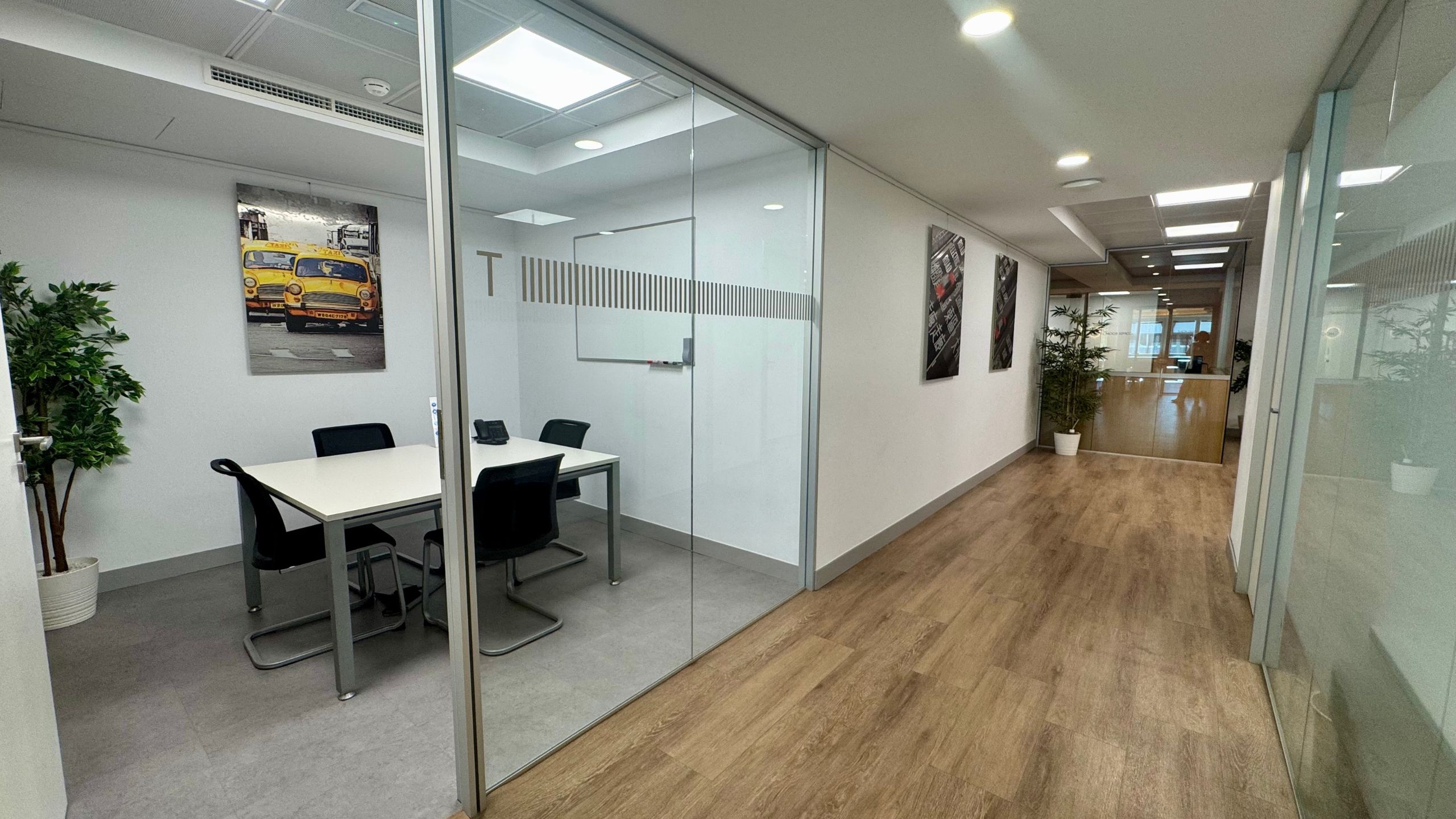
In environments such as business centers, where multiple companies, startups, and independent professionals coexist, this type of tool fits naturally. The combination of flexible spaces and advanced technology is giving rise to a new way of working that is more agile, more efficient and completely results-oriented.
In short, Claude is not just a passing trend. It is the reflection of a deeper change in the way we understand productivity. And those companies that know how to integrate it in time will be better positioned to compete in an increasingly dynamic market.
How does Claude improve productivity on a day-to-day basis?
The real revolution of tools like Claude is not only in what they do, but in how they transform the daily routine within a company. Productivity is no longer exclusively dependent on time and is now directly linked to the efficiency with which tasks are managed.
In the day-to-day running of any business, there are dozens of processes that consume resources without providing clear strategic value.
This is where Claude makes a difference.
Automation of repetitive tasks
Answering emails, writing internal documents, organizing ideas or preparing reports are necessary, but often repetitive, tasks. Claude allows you to automate a large part of these processes, reducing the operational burden and freeing up time for more relevant functions. This is especially useful in dynamic environments such as office rental in Madrid, where agility in management and communication with clients is key.
Professional content writing and generation
One of Claude’s strengths is his ability to generate clear, well-structured texts adapted to the professional tone required by a company. From commercial proposals to blog articles or presentations, having this support means a significant saving of time and improves the quality of corporate communication.
Analysis and synthesis of information
Teams often spend hours reviewing documents, reports, or data to draw conclusions. Claude can analyze large volumes of information and provide accurate summaries in a matter of seconds. This allows for faster and better-informed decisions, which is essential in any competitive business environment.
Decision support
Although the final decision always rests with people, having a tool that organizes information, poses scenarios and helps structure ideas provides a clear advantage. Claude acts as an assistant that facilitates mental clarity and reduces uncertainty in complex processes.
Optimizing teamwork
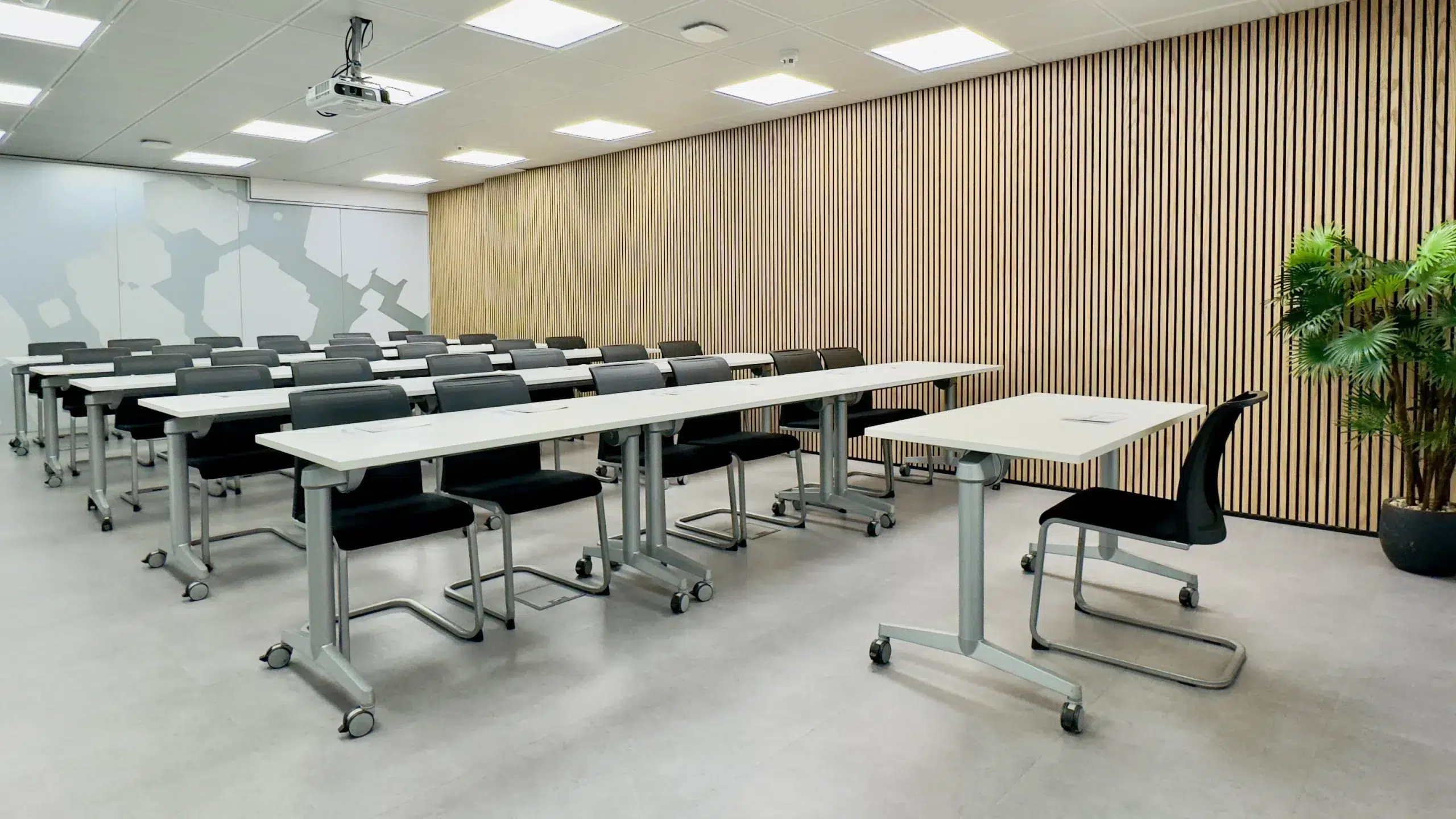
In collaborative spaces, such as those where room rental is offered in Madrid, coordination between teams and the preparation of effective meetings is essential. Claude can help prepare agendas, summarize meetings, or generate conclusions, making each meeting more productive and results-oriented.
In short, integrating Claude into the day-to-day does not mean working more, but working better. It’s about eliminating friction, reducing downtime, and allowing each professional to focus on what really drives their business growth. In an environment where every minute counts, that difference is key.
Practical applications in companies and professional firms
Beyond theory, the true value of tools like Claude is appreciated when they are integrated into the day-to-day life of companies and professional firms. Its versatility allows it to adapt to different sectors and business sizes, becoming a transversal resource that provides efficiency in multiple areas.
In the case of SMEs and startups, where resources are often limited, Claude acts as a strategic support. It allows you to cover tasks that would otherwise require more staff or more time: from writing business plans to creating presentations for investors or managing digital content. This makes it easier for teams to focus on growing without being overwhelmed by operational burden.
In administrative departments, its impact is especially notable. Document management, writing internal communications or organizing information are tasks that can be greatly optimized. Claude not only speeds up these processes, but also reduces errors, which is key in areas where accuracy is critical.
On the other hand, sales and marketing teams find in this tool an ally to improve their performance. From the development of personalized commercial proposals to the generation of content campaigns, Claude helps to maintain a coherent, professional communication aligned with business objectives. In addition, it allows messages to be quickly adapted according to the customer or the context, which is essential in competitive markets.
In the field of consulting and professional services – such as law firms, consultancies or consulting firms – the ability to analyse information and synthesize it becomes even more valuable. Claude can review extensive documentation, prepare reports, structure arguments, or even assist in strategizing. This does not replace expert knowledge, but it does multiply the work capacity of professionals.
Another relevant aspect is its usefulness in the preparation of meetings and presentations. In environments where time is limited, arriving at a meeting with clear and well-structured information makes all the difference. Claude allows you to generate summaries, define key points or even anticipate possible questions, raising the level of preparation of any team.
In coworking spaces, such as business centers, these applications are further enhanced. Companies from different sectors coexist in the same environment, and having tools that streamline processes facilitates a more fluid, professional and results-oriented work dynamic.
Claude’s competitive advantages over other AI tools
In a market where artificial intelligence solutions are growing at a rapid pace, it is not enough to “have AI”, but to choose well which tool best fits the needs of the business. In this sense, Claude has managed to differentiate itself and position itself as a particularly interesting option for companies and professionals.
One of its main advantages is the quality and consistency of the responses. Claude stands out for generating more natural, structured texts aligned with a professional tone. This is key in business environments, where communication – whether internal or external – must convey clarity, rigor and trust. It’s not just about generating content quickly, it’s about doing it right.
Another differentiating point is their ability to work with large volumes of information. While other tools may fall short when analyzing long documents, Claude allows you to process long texts, summarize them, and draw useful conclusions with great precision. For firms, consultancies or companies that handle complex documentation, this means considerable time savings.
Ease of use also plays an important role. You don’t need advanced technical knowledge to get started. Its interface is intuitive and allows any professional, regardless of their profile, to quickly integrate it into their routine. This accelerates adoption within the company and avoids friction in teams.
At the same time, Claude has placed special focus on security and data processing, an increasingly important aspect in the business environment. Developed by Anthropic, the system is designed with principles aimed at the responsible use of artificial intelligence, which provides extra confidence to companies that work with sensitive information.
Another noteworthy aspect is its adaptability to different sectors and functions. It is not a tool limited to a single use, but can be applied in multiple areas: from marketing and sales to administration, human resources or consulting. This versatility allows the same solution to add value in different departments, optimizing technological investment.
Last but not least is its direct impact on actual productivity. Beyond specific functionalities, Claude achieves something that not all tools achieve: integrate naturally into the workflow. It does not force you to change the way you work, but rather improves it, eliminating friction and making it easier for teams to be more agile and efficient.
In short, Claude’s competitive advantage does not lie in a single feature, but in the balance between power, usability and business approach. For companies that are looking for more than just a one-off tool – and aspire to improve the way they work – this difference is what really drives the value.
Impact on efficiency and cost reduction
Talking about artificial intelligence in the company is no longer talking about innovation in the future, but about profitability in the present. Tools such as Claude are demonstrating that it is possible to improve operational efficiency while reducing costs, which is especially relevant in an increasingly competitive business context.
One of the main benefits is the optimization of working time. Many tasks that previously took hours—such as writing reports, analyzing documents, or preparing proposals—can be solved in minutes. This time savings not only improves individual productivity, but allows teams to focus on strategic activities that truly add value to the business.
Added to this is the reduction of operating costs. By automating processes and improving efficiency, companies can do more with fewer resources. It is not necessarily a matter of reducing staff, but of making better use of existing talent, avoiding the overload of repetitive tasks and improving internal organization.
Another key aspect is the reduction of errors. In areas such as administrative management or the preparation of documentation, failures can entail a significant cost, both economic and reputational. Claude helps to minimise these risks by offering more structured, revised and coherent content, which translates into greater reliability in daily work.
In addition, artificial intelligence allows for better planning and decision-making. By having synthesized and well-organized information, business leaders can act more quickly and accurately. This avoids wasting time and resources due to unfounded decisions or inefficient processes.
In business environments such as business centers, where flexibility and optimization of resources are essential, this impact is multiplied. The combination of efficient spaces with advanced technological tools allows companies to adjust their costs without sacrificing a professional image or a high level of service.
Finally, we must not forget the effect in the medium and long term. The adoption of this type of solution not only generates immediate savings, but also improves the ability of the business to adapt. More agile companies, with lighter structures and optimized processes are better prepared to grow and face changes in the market.
Risks, limits and good practices in the use of AI
The incorporation of tools such as Claude into the business environment is a clear advantage in terms of productivity, but it also requires responsible and strategic use. Like any technology, artificial intelligence is not without risks or limitations, and knowing them is key to taking advantage of its full potential without compromising the business.
One of the main aspects to take into account is the reliability of the information. Although Claude offers coherent and well-structured answers, it is still a tool that generates content from patterns. Therefore, it is essential to review and validate information, especially in critical contexts such as strategic decisions, legal documentation or external communication.
Another relevant point is technological dependence. Delegating too much can lead to a loss of self-judgment or internal knowledge. AI should be understood as a support, not a substitute for professional thinking. The companies that best leverage these tools are those that combine technology with human expertise.
Data protection is another key aspect. In an environment where sensitive information is handled – customers, contracts, financial data – it is essential to establish clear protocols on what type of information can be shared with AI tools. In this sense, solutions developed by companies such as Anthropic focus on safety, but even so, the final responsibility always falls on the company.
It’s also worth considering the limits on personalization and context. Although Claude is an advanced tool, he doesn’t have an in-depth knowledge of each company, its culture, or its specific nuances. Therefore, it is important to use their answers as a basis for work and adapt them to the specific reality of the business.
To minimize these risks, it is advisable to follow a series of good practices. Firstly, train teams in the proper use of the tool, establishing clear criteria on when and how to use it. Second, implement review processes that guarantee the quality and veracity of the content generated. And finally, integrating AI progressively, evaluating its impact and adjusting its use according to the real needs of the company.
Artificial intelligence offers enormous opportunities, but its true value depends on how it is used. A balanced approach, combining technology, control and professional judgment, will allow companies to benefit from its advantages without taking unnecessary risks.
The Future of Work: AI, Flexible Spaces and New Forms of Productivity
The concept of work is changing at a rapid pace. It’s no longer just about where we work, it’s about how we do it and with what tools. The emergence of artificial intelligence, with solutions such as Claude, is redefining productivity and giving way to much more agile, flexible and results-oriented models.
In this new scenario, the traditional office is losing prominence to more dynamic spaces. Professionals no longer need rigid structures, but environments that adapt to their real needs: from private offices to meeting rooms or coworking areas. This flexibility allows companies to optimize costs while also providing their teams with a more comfortable and efficient environment.
The combination of advanced technology and flexible spaces is precisely what is making the difference. On the one hand, AI makes it possible to automate tasks, streamline processes and improve decision-making. On the other hand, business centers offer ready-to-use infrastructures, without the need for large investments or long-term commitments.
This hybrid model supports a smarter way of working. Teams can focus on high-value tasks while delegating operational processes to tools like Claude. At the same time, they have professional spaces that project a solid image in front of customers and collaborators.
In addition, this evolution is driving a new business culture, more oriented towards efficiency than face-to-face. The important thing is no longer to spend more hours in the office, but to make better use of your time. In this sense, technology and the work environment are no longer independent elements and become part of the same strategy.
At Ibercenter we have been seeing this transformation first-hand for years. Companies of all sizes are committed to flexible solutions that allow them to grow without assuming unnecessary costs, while integrating digital tools that optimize their daily operations. The result is a more dynamic, competitive business ecosystem that is ready to adapt to any change.
Conclusion
Artificial intelligence is no longer an option but a real competitive advantage. Tools like Claude make it possible to optimize time, improve efficiency and make decisions with greater agility.
Add to this flexible and professional work environments, and the result is clear: more productive companies, with fewer operational burdens, and more focused on growth.
At Ibercenter we are clear: you focus on your business, we – together with technology – take care of the rest.