Digital Nomad Visa in Spain and the Beckham Law in Madrid
Spain’s digital nomad visa: requirements, who is eligible and how to apply, its link to the Beckham Act, and why you should set up a business address in Madrid.

TL;DR
The digital nomad visa in Spain is the authorisation that allows professionals from outside the European Union to reside in the country while working remotely for companies or clients located outside Spain. One of its main attractions is that it can be combined with the Beckham Law, the special tax regime for individuals who move to Spain. It was introduced through the Startup Law and requires applicants to demonstrate sufficient income, a pre-existing employment or professional relationship, qualifications or experience, and health insurance. Applications are processed relatively quickly when submitted from Spain.
Madrid attracts a significant proportion of these applicants thanks to its connectivity, business ecosystem and quality of life. Anyone arriving with a digital nomad visa needs more than just a permit: they need a professional address where they can receive notifications, register their business activity and, depending on their circumstances, a flexible workspace. In this article, we explain what the digital nomad visa is, who it applies to, how to apply for it, how it fits with the Beckham Law and how to settle in Madrid without unnecessary administrative friction.
What is the digital nomad visa in Spain?
The digital nomad visa, technically known as the international remote working visa, is a residence authorisation aimed at professionals who work remotely and want to do so from Spain. It was introduced by Law 28/2022 on the promotion of the startup ecosystem, better known as the Startup Law, which amended international mobility regulations to accommodate this new way of working. Its stated aim is to attract talent and economic activity, and the digital nomad visa is one of its most visible measures.
The basic concept is simple: it allows a person from outside the European Economic Area to reside legally in Spain while maintaining employment or self-employed activity with companies or clients located outside the country. In our experience supporting professionals who relocate to Madrid, this is the distinction that is most important to emphasise, because it differentiates this visa from other authorisations: the work is performed remotely and the source of income is predominantly outside Spain.
The legislation supporting this arrangement can be consulted in the Spanish Official State Gazette, where the Startup Law and its amendments to the regulations supporting entrepreneurs were published. It is advisable to review this legislation alongside the practical information on the application procedure, because the law establishes the framework while the specific process is handled by specialised administrative units.
Who is the digital nomad visa intended for?
The digital nomad visa is designed for third-country nationals, in other words, people who are not citizens of the European Union or the European Economic Area, as the latter do not require a visa to live and work in Spain. Within this group, the digital nomad visa covers two clearly differentiated profiles.
The first is an employee who maintains an employment relationship with a foreign company and can perform their role remotely. In this case, the company must have been genuinely operating for a certain period of time and the employment relationship must have a certain degree of seniority. The second profile is a self-employed professional or freelancer who provides services to several clients, generally located outside Spain. For this profile, the regulations allow a limited proportion of income to come from Spanish companies, provided that it is not the main source.
In both cases, the underlying principle is the same: the digital nomad lives in Spain but their activity and income are linked to other countries. This is what distinguishes the digital nomad visa from an ordinary work permit, where the activity is carried out for the Spanish labour market. This is why the digital nomad visa is particularly suitable for consultants, developers, designers, marketing professionals, translators and, in general, anyone whose work can be carried out remotely using digital tools.
What are the requirements for the digital nomad visa?
The requirements for the digital nomad visa combine financial, educational and documentary conditions. They are demanding but reasonable, and it is advisable to prepare them in advance because foreign documentation often needs to be legalised or apostilled and accompanied by a sworn translation. These are the main points considered when granting the digital nomad visa.
In terms of income, applicants must demonstrate sufficient financial resources, calculated as a percentage of the Spanish Minimum Interprofessional Wage (SMI). The usual benchmark is around twice the SMI for the main applicant, with additional amounts required when family members accompany them. As the SMI is updated periodically, the exact amount varies from year to year, so it is advisable to check the threshold in force when applying for the digital nomad visa rather than relying on an amount from a previous period.
The other usual requirements for the digital nomad visa are as follows:
- Recognised qualifications, through a university degree or higher education qualification, or alternatively a minimum level of professional experience in the sector, usually set at three years.
- Pre-existing employment or professional relationship, with a minimum period of employment or engagement with the company or clients, together with evidence that the activity can be performed remotely.
- Genuine existence of the contracting company, which must have been operating for a minimum period.
- Health insurance providing full coverage in Spain, whether public or private depending on the circumstances.
- No criminal record in the countries of residence during the preceding years, demonstrated by the corresponding certificate.
- No previous irregular residence in Spain or residence during a specified previous period of years, a condition that also relates to the tax advantages discussed later.
| Requirement | Employee | Self-employed professional |
|---|---|---|
| Employment/professional relationship | Contract with a foreign company | Contracts with clients, mostly outside Spain |
| Income from Spanish companies | Not accepted as the main source | Accepted on a limited basis |
| Length of relationship | Required with the company | Required with clients |
| Qualifications or experience | Qualification or minimum experience | Qualification or minimum experience |
| Insurance and criminal record | Mandatory | Mandatory |
This table is for guidance only: each application is assessed individually and the specific documentation required may vary. As a precaution, our advice is to treat these digital nomad visa requirements as a starting point and confirm the details with an immigration specialist, as administrative criteria may be refined through practice.
How do you apply for the digital nomad visa step by step?
There are two routes for applying for the digital nomad visa, and the choice between them has important practical consequences that should be understood before starting the process. The first option is to apply for the visa from the country of origin, at a Spanish consulate or consular office. The second is to enter Spain as a tourist and apply directly for residence authorisation once in the country.
When the digital nomad visa application is submitted from Spain, responsibility lies with a specialised administrative unit that processes authorisations for professionals and companies and issues decisions within a short period of working days. Positive administrative silence also applies, meaning that if no response is received within the legal deadline, the application is deemed to have been approved. This speed is one of the reasons why many professionals prefer this route for the digital nomad visa.
In summary, the process for obtaining the digital nomad visa usually follows these steps:
- Gather the documentation, including contracts, certificates proving the length of the professional relationship, qualifications or professional experience, proof of income, health insurance and criminal record certificates, all duly legalised and translated.
- Submit the application, either at the consulate in the country of origin or to the competent unit if already in Spain.
- Wait for the decision within the legal deadline, with the advantage of positive administrative silence for applications processed from within Spain.
- Obtain the authorisation and, where applicable, apply for the Foreigner Identity Card and complete the corresponding registration.
- Register locally and organise the practical arrangements, including a professional address and an address for official notifications.
The administrative speed of the digital nomad visa is real, but it can only be fully taken advantage of when the documentation is complete and properly organised. Most delays are not caused by the Administration, but by incomplete applications or missing translations.
This final point is often underestimated. Deciding in advance where the professional address will be established and which address will be used to receive official communications helps prevent delays precisely when the digital nomad visa has already been granted and it is time to start operating.
What is the Beckham Law and how does it relate to the visa?
The Beckham Law is the popular name for the special tax regime applicable to employees, professionals, entrepreneurs and investors who move to Spain. It is regulated under Article 93 of the Spanish Personal Income Tax Law and owes its nickname to the footballer who was one of the first people to benefit from it. Its relationship with the digital nomad visa is direct: the Startup Law expressly extended this regime to include people who move to Spain to work remotely, including digital nomad visa holders.
The mechanism works as follows. As a general rule, anyone who becomes a tax resident in Spain is subject to Spanish Personal Income Tax (IRPF) on their worldwide income at progressive rates. The Beckham Law, by contrast, allows individuals to be taxed for a limited period under the rules of Non-Resident Income Tax, which can be more favourable for middle and higher incomes. This is one of the main mechanisms for attracting international talent, which is why the digital nomad visa and the Beckham Law are so often mentioned together.
It is important to understand that they are two separate but complementary arrangements. The digital nomad visa is a residence authorisation; the Beckham Law is a tax regime. It is possible to hold the visa without opting into the regime, and the tax regime has its own requirements and application deadline. As taxation is subject to interpretation and regulatory changes, any decision should be supported by a tax adviser; the information provided here is for guidance only and does not replace professional advice.
What tax advantages does the Beckham Law offer digital nomads?
The main advantage of the Beckham Law for digital nomads is the applicable tax rate. Instead of the progressive IRPF scale, a fixed rate applies to employment income up to a high threshold, with a higher rate applying to any excess. In practice, for many qualified professionals this can represent significant tax savings during the first years of residence, precisely when the digital nomad is establishing themselves in the country.
The regime applies during the tax year in which the change of residence takes place and the following five tax periods, for a total of six years. After this period, the taxpayer becomes subject to the general tax regime. Another important feature is that, subject to certain qualifications, taxation focuses on Spanish-source income, which is particularly consistent with the profile of a digital nomad whose main activity is linked to other countries.
To qualify for the Beckham Law, a digital nomad must meet several conditions:
- They must not have been a tax resident in Spain during the previous tax periods specified by law.
- The move to Spain must be based on one of the circumstances provided for under the legislation, including remote working using digital and telecommunications systems, which covers digital nomad visa holders.
- The regime must be applied for within the deadline, during the months following registration with Social Security or the start of the activity. This deadline should not be missed because it cannot be extended.
| Aspect | General IRPF regime | Beckham Law |
|---|---|---|
| Applicable rate | Progressive scale | Fixed rate up to a threshold, higher rate on the excess |
| Tax base | Worldwide income | Focused on Spanish-source income (subject to certain qualifications) |
| Duration | Indefinite while tax resident | Year of the move plus five tax years |
| Application deadline | Not applicable | Limited period following registration or start of activity |
Official information on IRPF and the special regime for inbound taxpayers is available on the Spanish Tax Agency's electronic office, which should be consulted to verify the rates, thresholds and deadlines currently in force. We again recommend caution: specific figures and details of the regime may change, and the decision to opt for the Beckham Law should be assessed on a case-by-case basis.
How long does the visa last and how is it renewed?
The duration of the digital nomad visa depends on the route used to apply. When processed through a consulate in the country of origin, the visa is usually granted for an initial period of one year, after which a residence authorisation must be obtained in order to remain for longer. When the application is submitted directly from Spain through the competent unit, the residence authorisation is granted for a longer period, of up to three years.
The authorisation associated with the digital nomad visa can be renewed as long as the conditions that led to its approval continue to be met: remote activity, sufficient income and the remaining requirements. Renewals can lead to periods which, when combined, may open the way to long-term residence once the general time requirements under Spanish immigration regulations have been met.
This timetable is important when planning both personal life and taxation. The duration of the digital nomad visa and that of the Beckham Law do not coincide exactly, and coordinating them correctly helps avoid surprises. It is therefore advisable to understand from the outset how long each arrangement lasts and which steps must be taken to extend residence and, where applicable, maintain the tax regime for as long as permitted by law.
Why is Madrid a key destination for digital nomads?
Madrid has established itself as one of the preferred destinations for people arriving with a digital nomad visa, and this is no coincidence. The city combines international connectivity through its airport, a dense business ecosystem, a broad cultural and gastronomic offering and a cost of living that remains competitive compared with other European capitals. For digital nomads who can choose where to establish themselves, these factors carry considerable weight.
This is complemented by a critical mass of professional services. A digital nomad arriving in Madrid can easily find immigration and tax advisers, administrative consultancies, entrepreneurial communities and a network of flexible workspaces that allow them to start operating from day one. This infrastructure reduces the friction involved in relocating, which is precisely one of the greatest obstacles for anyone moving to a new country.
Madrid also offers the possibility of working from prestigious locations without taking on the costs of a traditional office. Areas such as Azca, on the Castellana axis and next to Nuevos Ministerios, are home to well-connected business centres that project a solid image to international clients. To discover one of these prime locations, you can explore the Azca business centre, in the heart of Madrid's financial district. This combination of location and flexibility is ideal for the digital nomad profile.
Why does a digital nomad need a professional address in Madrid?
This is where the theory of the digital nomad visa meets the practical realities of everyday life. Once the authorisation has been granted, the professional needs a stable address to receive notifications, deal with public authorities and, in many cases, register as self-employed or incorporate a company. A reliable address is not a luxury; it is a basic operational requirement for a digital nomad.
The most efficient solution for most of these professionals is a virtual office in Madrid, which provides a prestigious professional address, receipt and management of correspondence and the ability to project a professional image without having to rent permanent physical premises. For a digital nomad who works remotely and travels frequently, this service solves the address issue without creating fixed overheads. And when the project requires a company to be formally established, business address services in Madrid make it possible to establish the company's registered and tax address in a central, professionally managed location.
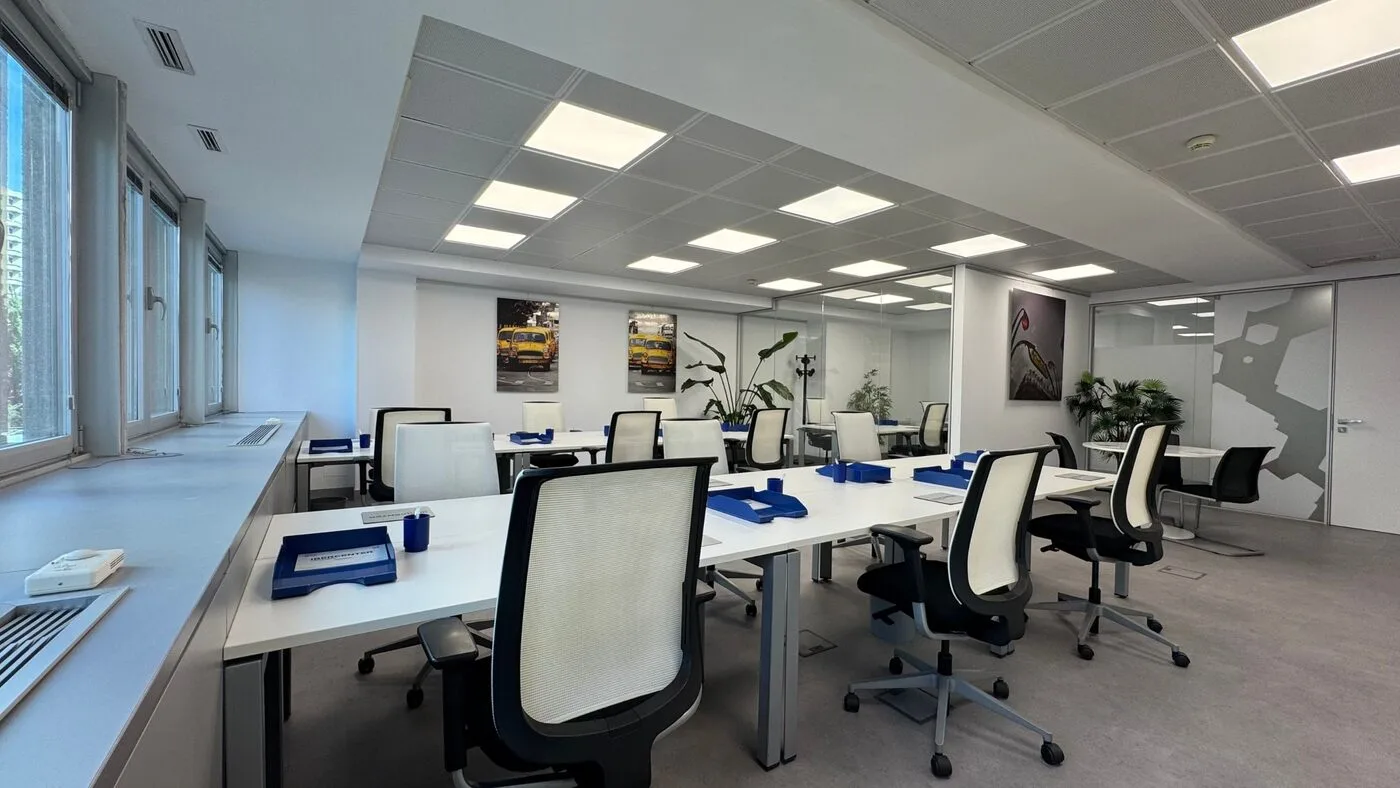
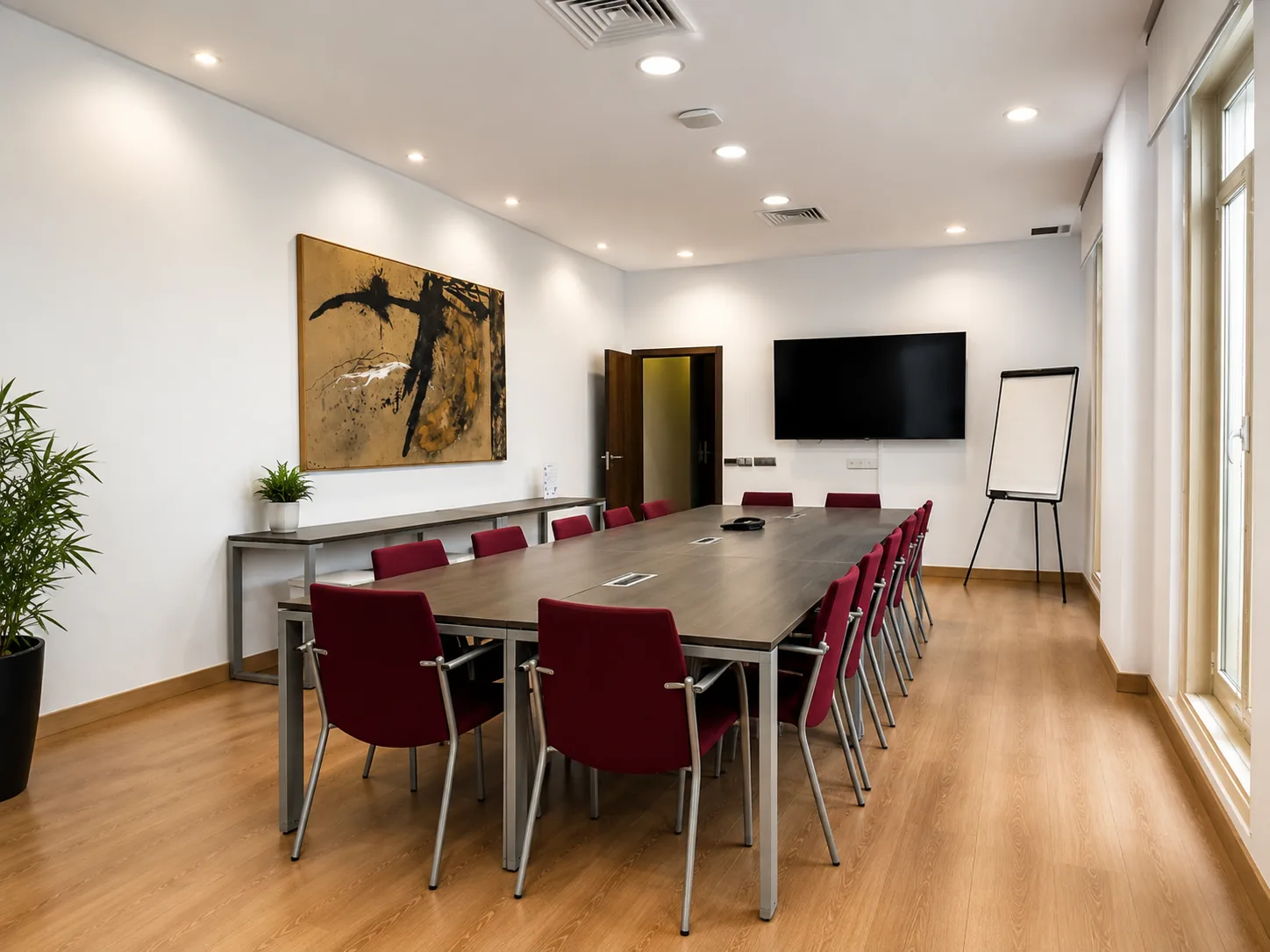
Not all digital nomads have the same workspace requirements, which is why the service should be scaled according to each stage. Anyone who needs a place to concentrate or meet clients occasionally can use flexible workspace through office rental in Madrid, with the flexibility to rent only for the time actually required. Those seeking privacy for their team can choose private offices, providing a closed and confidential workspace. The principle is the same one we always advocate: you choose how you want to work, and we make sure everything runs smoothly, so that digital nomads can devote their energy to their business rather than logistics.
What mistakes should you avoid when applying for the visa?
The first common mistake is underestimating the time required to prepare foreign documentation. Legalising or apostilling certificates, obtaining up-to-date criminal record certificates and arranging sworn translations can take weeks, and many digital nomad visa applications are delayed because documents arrive late or are incomplete. Starting to gather the documentation well in advance is the best investment of time.
The second mistake is confusing the digital nomad visa with the Beckham Law and assuming that one automatically implies the other. They are two separate procedures, each with its own requirements and deadlines. Opting into the tax regime requires a specific application within the applicable deadline, and failing to apply in time means losing the benefit for the entire period. Likewise, holding the visa does not require an individual to opt into the tax regime if it is not advantageous in their particular circumstances.
The third mistake is overlooking practical logistics: arriving in Madrid without having arranged a professional address, an address for notifications or a place to work. These details may seem minor compared with the digital nomad visa itself, but they determine whether the relocation process is smooth or problematic. Based on our experience, our recommendation is to plan the immigration, tax and operational aspects in parallel, because all three need to be aligned for a digital nomad's move to the city to go smoothly.
Frequently asked questions about the digital nomad visa
Who can apply for the digital nomad visa in Spain?
Nationals of countries outside the European Union and the European Economic Area who work remotely for companies or clients located outside Spain can apply. This includes both employees of foreign companies and self-employed professionals who provide services to several clients. In the latter case, a limited proportion of income from Spanish companies is permitted.
What income must be demonstrated for the digital nomad visa?
Applicants must demonstrate sufficient financial resources, calculated as a multiple of the Spanish Minimum Interprofessional Wage (SMI), with the usual benchmark being around twice the SMI for the main applicant and additional amounts for family members. As the SMI is updated every year, it is advisable to check the threshold in force at the time the application is submitted.
Does the digital nomad visa automatically provide access to the Beckham Law?
No. They are two separate procedures: the visa is a residence authorisation and the Beckham Law is a tax regime. The Startup Law extended the regime to include remote workers, but opting into it requires a specific application submitted within the established deadline following registration or the start of the activity.
How long does the digital nomad visa last?
It depends on the application route. When applied for through the consulate in the country of origin, it is usually granted for an initial period of one year; when processed from Spain through the competent unit, the residence authorisation may be granted for up to three years. In both cases, it can be renewed provided the conditions that led to its approval continue to be met.
Why choose Madrid as a base as a digital nomad?
Madrid offers international connectivity, a dense business ecosystem, specialised professional services and an extensive network of flexible workspaces. All of this reduces the friction involved in relocating and makes it possible to start operating from day one with a professional image in prestigious locations.
Do I need a physical office with a digital nomad visa?
Not necessarily. Many professionals meet their address requirements through a virtual office, which provides a professional address and correspondence management without the need for permanent physical premises, and supplement this with flexible workspaces or private offices when required. International remote working regulations may evolve, so it is advisable to confirm the details with a specialist adviser.