Top tips for improving your office decor
Office decoration has evolved from being merely aesthetic into a strategic factor for any company. Nowadays, the workspace not only reflects corporate identity but also directly influences the productivity, motivation, and well-being of those who use it daily. A well-designed office conveys professionalism, trust and consistency to the internal team as well as to clients and collaborators.
In today’s highly competitive business environment, paying attention to decor is an investment that makes all the difference. Colors, lighting, furniture and spatial layout can boost concentration, foster creativity and enhance the overall work experience. It is not about following fleeting trends, but about creating functional and comfortable environments that are aligned with the company’s values.
An increasing number of businesses opting for office rentals in Madrid are looking for spaces that are ready to start working from day one, with a refined and professional decor that projects a solid image. The same applies to coworking spaces in Madrid, where design plays a key role in promoting collaboration, networking and daily comfort.
At Ibercenter, we have seen for years how good office decor can transform the way a business works. That is why, in this article, we share how to get your office decoration right, which aspects to consider and why a well-designed space can become a true ally for your business growth.
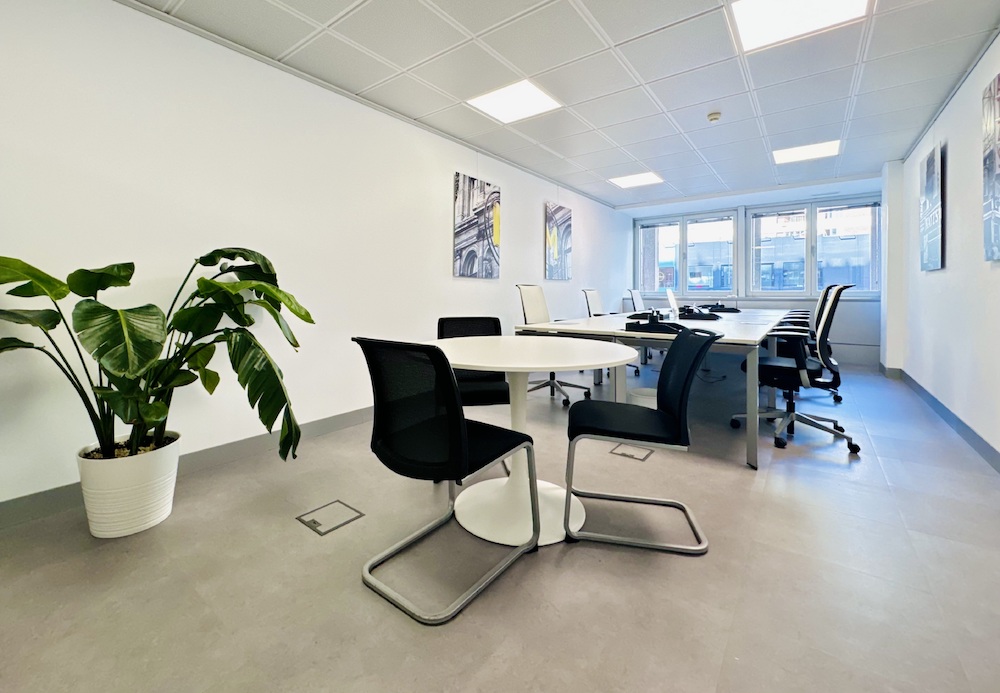
Office decor is more than just aesthetics
Talking about office decor is not just about pretty designs or visual trends. It is a much broader and more strategic concept that directly influences a company’s daily operations, the perception we convey to clients and collaborators and above all, the well-being and productivity of the people working there. A well-decorated office does not just look good, it works better.
Office decoration has a direct impact on professional performance. A poorly laid-out space, with deficient lighting or inadequate furniture, can lead to fatigue, stress and even long-term physical issues. Conversely, an office designed with functionality in mind featuring well-defined areas, good acoustics and a pleasant environment promote concentration, efficiency and team motivation. When people feel comfortable in their workplace, their attitude changes and their performance improve.
Furthermore, office decoration plays a key role in corporate image. In many cases, the office is the first physical contact a client has with a company. The reception area, meeting rooms and private offices convey messages subconsciously: professionalism, trust, order, innovation or stability. A thoughtful decor reinforces brand credibility and helps create a great impression from the very first moments, something essential in competitive business environments.
Another essential aspect is the emotional component. Office decor influences the mood of those who spend a large part of their day there. Well-chosen colors, the presence of natural light, pleasant materials and small decorative details can make the difference between a cold space and a welcoming one. These elements contribute to creating a more human work environment, where people feel valued and comfortable, reinforcing their commitment to the company.
Companies are looking for ready-to-use offices that combine functionality, design and a professional image without the need for large initial investments. In this sense, having well-decorated spaces designed for different needs has become a key competitive advantage.
Ultimately, office decor is a strategic investment, not a superficial expense. It goes far beyond aesthetics: it improves productivity, reinforces brand image, cares for people and helps create work environments aligned with business objectives. Understanding it this way is the first step toward building offices that truly add value to the company.
Keys to professional and functional office decor
Achieving professional and functional office decor is not about filling the space with decorative elements, but about designing a balanced environment where every detail has a purpose. A well-planned office should facilitate daily tasks, convey a consistent company image, and adapt to the real needs of its users. To achieve this, it is essential to consider a series of key factors that make all the difference.
The first of these is finding the balance between aesthetics and functionality. An office can be visually attractive, but if it is not practical, it will end up becoming an uncomfortable space. Office decor must support the activities performed within it; an individual office is not the same as a shared workspace or a customer service area. Each space must be designed for its specific use, avoiding unnecessary elements and prioritizing comfort.
Another fundamental key is the spatial layout. Good organization improves flow, reduces distractions and promotes concentration. Correctly separating work zones, common areas and meeting spaces helps create a more orderly and efficient environment. In this sense, office decor also uses elements such as partitions, shelving or acoustic panels which allow for the delimitation of space without losing a sense of openness or natural light.
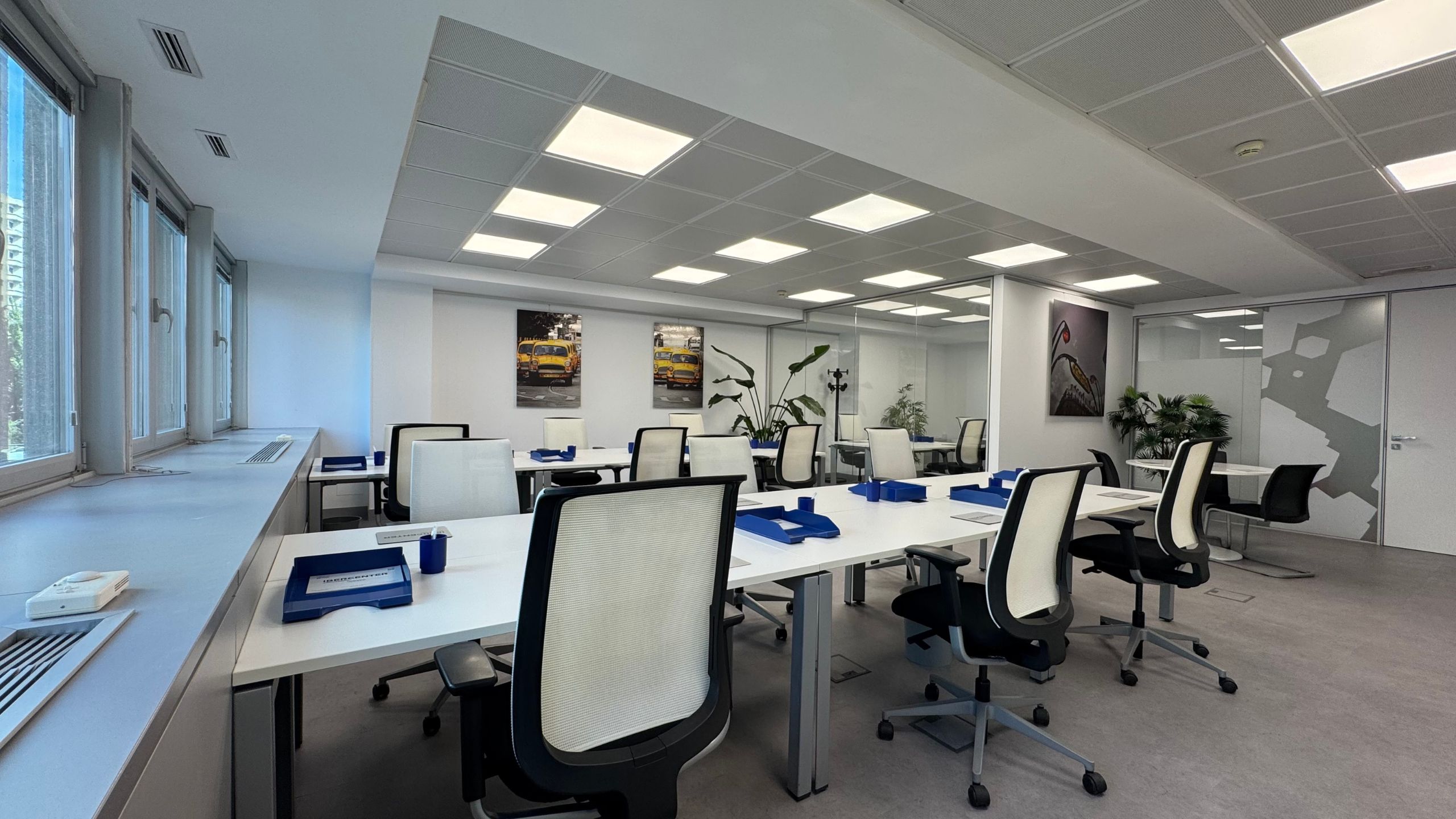
Of course, ergonomics is another essential pillar. Desks at the right height, comfortable and adjustable chairs and the correct placement of screens and computer equipment are key factors in caring for people’s health. Professional office decor takes the physical well-being of the team into account, as a comfortable environment reduces sick leave, improves posture and increases long-term productivity.
The use of color and lighting is also a decisive factor. Neutral tones convey professionalism and serenity while corporate colors can be used strategically to reinforce the company’s identity. Natural light should always be the protagonist complemented by well-distributed artificial lighting that avoids shadows and glare. A proper combination of both elements creates spaces that are both pleasant and functional.
Finally, it is important to opt for flexible and adaptable office decor. Companies evolve and their spaces must be able to evolve with them. Modular furniture, mobile solutions and timeless decor allow the office to adapt to new teams, changes in activity or business growth without the need for major renovations.
How to choose the right color palette?
The choice of colors is one of the most influential aspects of office decor as it affects both the perception of the space and the mood and performance of the people working within it. Colors communicate sensations, reinforce corporate identity and can completely transform a professional environment. Therefore, selecting the right palette is not a random aesthetic decision but an essential part of office design.
In office decor, neutral colors are often the safest foundation for creating professional and timeless environments. Tones such as white, beige, grey or earth colors provide brightness, order and visual spaciousness, while also making it easier to combine with other decorative elements. These colors help create balanced and elegant spaces, ideal for private offices, meeting rooms or common areas where the goal is to convey professionalism and trust.
However, this does not mean that offices should be neutral spaces without personality. The strategic use of accent colors is an excellent tool in office decor. Incorporating touches of color on specific walls, furniture, textiles or decorative elements allows for a more dynamic space without overwhelming it. Colors like blue convey calm and focus, green is associated with well-being and creativity and warm tones can provide energy and approachability if used in moderation.
Another key aspect to consider is the activity performed in each space. Not all office areas require the same color palette. For instance, in work areas that demand high concentration, it is advisable to opt for soft and relaxing colors. In contrast, in common areas or collaborative spaces, more vivid tones can be introduced to foster communication and creativity. Office decor must adapt to these uses to achieve a truly functional environment.
Lighting, both natural and artificial, also influences how colors are perceived. The same tone can vary considerably depending on the amount of light it receives. Therefore, before deciding on the final palette, it is important to analyze the orientation of the space and the type of lighting available. A correct combination of color and light improves the sense of comfort and prevents environments from feeling dull or excessively cold.
Choosing the Right Office Lighting
Lighting is one of the fundamental pillars of office decor, although it is often not given the importance it deserves. Proper lighting not only enhances the aesthetics of space but also directly influences productivity, concentration and the well-being of the team. Working in a poorly lit environment can cause eye strain, headaches and a constant feeling of fatigue, whereas well-designed lighting creates offices that are more comfortable, efficient and pleasant.
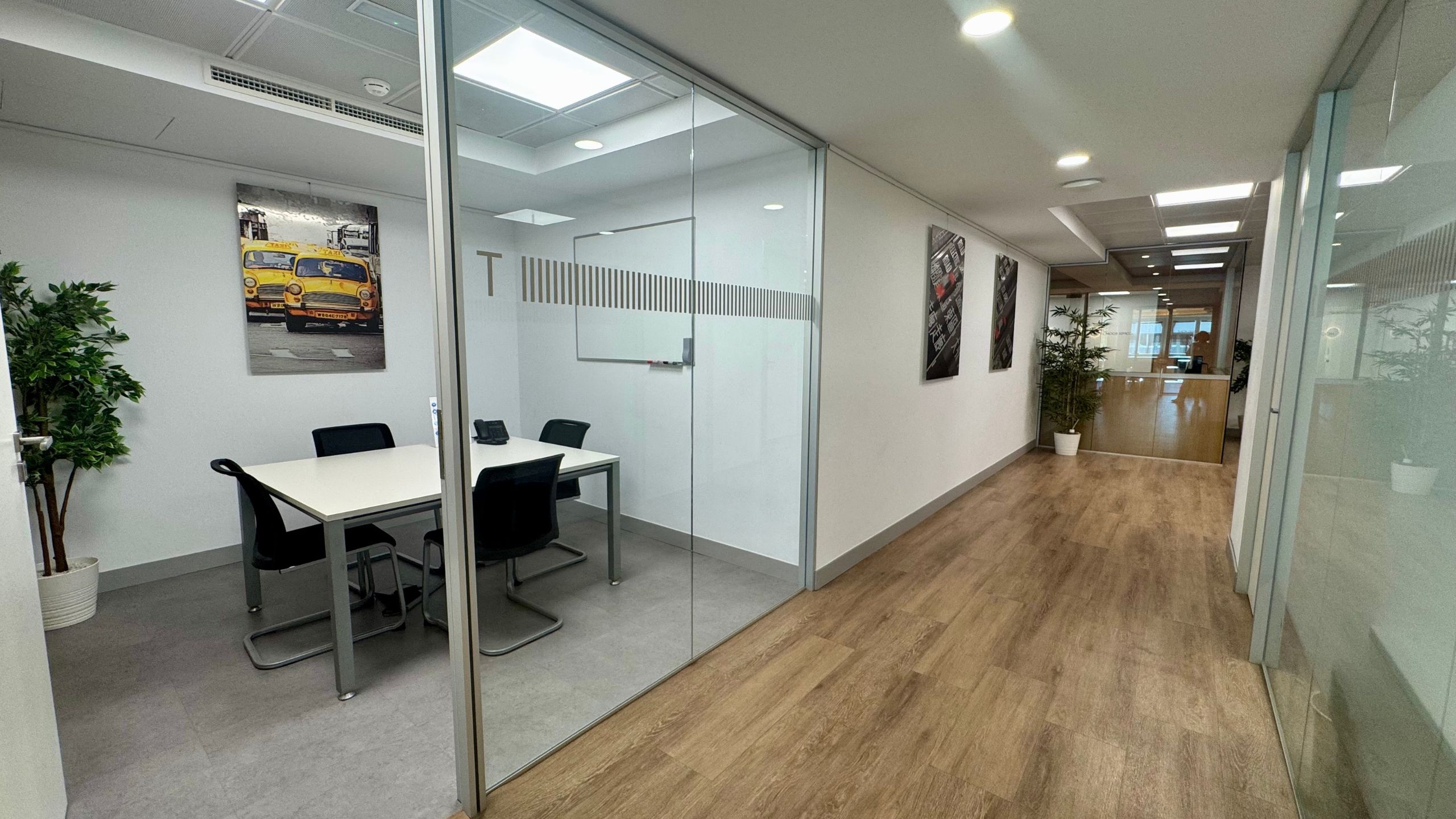
Natural light is, whenever possible, the main protagonist in office decor. Making the most of it provides multiple benefits, it improves mood, regulates biological rhythms and reduces stress levels. Furthermore, bright spaces convey a sense of spaciousness, order and professionalism. To maximize natural light, it is advisable to use light colors on walls and ceilings, furniture that does not block windows, and elements such as glass or transparent partitions that allow light to flow throughout the entire space.
However, it is not always possible to rely solely on natural light, which is why artificial lighting plays a key role in office decor. Ideally, different types of light should be combined according to the use of each area. General lighting should be uniform and avoid shadows or uncomfortable reflections, while task lighting, such as desk lamps or spotlights, helps in performing specific tasks with greater comfort and precision.
The type of artificial light is also a determining factor. Neutral or slightly cool white lights are typically the most suitable for work areas as they promote concentration and reduce eye strain. In contrast, in common areas or break zones, warmer lights can be used to provide a sense of comfort and approachability. This combination allows for the creation of distinct environments within the same office, adapted to the various day-to-day activities.
Ultimately, good lighting, both natural and artificial, is key to professional and efficient office decor. Investing in proper lighting not only enhances the image of the space but also looks after the team’s health and contributes to creating work environments that are more productive, comfortable and aligned with the company’s real needs.
The Importance of Office Furniture
Furniture is one of the most determining elements of office decor, as it directly influences the functionality of the space as well as the health, comfort and performance of the people who use it daily. Choosing the right furniture is not just an aesthetic matter, but a strategic decision that impacts productivity, professional image, and the team’s well-being.
Good office furniture must always be based on ergonomics. Spacious desks, adjustable chairs, proper monitor stands and a correct layout of work elements are essential to avoid poor posture, muscle strain and long-term physical issues. In modern office decor, comfort is no longer a luxury but a necessity. Paying attention to these aspects demonstrates commitment to people and directly results in a better working environment.
In addition to ergonomics, furniture plays a key role in space organization. Cabinets, shelving, drawer units and well-integrated storage solutions help maintain order, which is fundamental in any professional environment. A visually organized office conveys a sense of control, efficiency and professionalism, both for those who work there and for those who visit. In this sense, office decor should opt for practical, well-sized furniture adapted to the actual use of space.
Furniture design also plays an important role in corporate image. Materials, finishes and the style of the furniture communicate values silently but very effectively. Modern and minimalist furniture can convey innovation and dynamism while more classic and elegant pieces reinforce an image of solidity and experience. The key is for the furniture to be aligned with the company’s identity and the message it wants to project.
Another increasingly relevant aspect is furniture flexibility. Companies evolve, teams grow or change and spaces must be able to adapt easily. In current office decor, modular and versatile furniture allows for the reorganization of space without major investments or renovations, facilitating new ways of working and better adaptation to business needs.
Finally, we must not forget that furniture directly influences the daily work experience. We spend many hours in the office and doing so in a comfortable, functional and well-designed environment improves motivation and employee engagement. High-quality furniture conveys attention to detail and reinforces the perception of professionalism.
Common Areas and Meeting Rooms
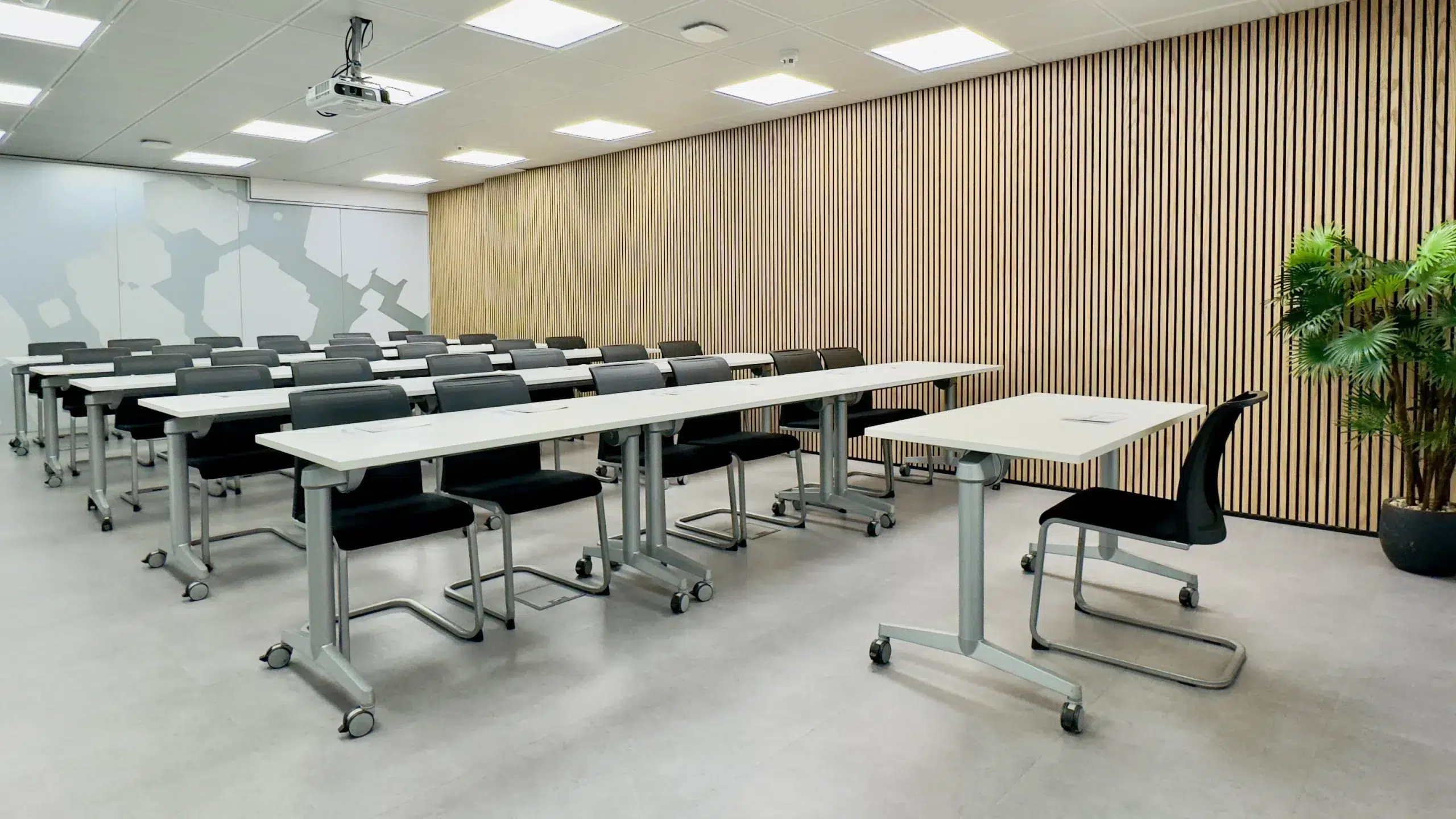
In meeting rooms, the priority is to create an environment that promotes focus and professional prestige. This involves integrating high-quality audiovisual technology, ensuring acoustic privacy and choosing furniture that allows for long sessions without discomfort. Meanwhile, common areas should act as a breath of fresh air, using more informal layouts that encourage spontaneous networking and team bonding.
Carefully planned decor in these spaces conveys professionalism, trust and a clear attention to detail.
In common areas, such as receptions, waiting rooms or break zones, office decor must strike a balance between comfort and corporate image. These spaces are the company’s business card and, in many cases, the first impression a visitor receives. A welcoming, organized and well-lit environment generates an immediate sense of trust. The use of neutral colors combined with decorative details, comfortable furniture and proper lighting contributes to creating pleasant spaces that are consistent with the company’s identity.
Meeting rooms, for their part, require special attention within office decor. They are spaces designed for concentration, communication and decision-making so they must be both functional and comfortable. A suitable table, ergonomic chairs, good lighting and proper acoustics are essential elements. Furthermore, technology should be integrated discreetly and efficiently, avoiding visible cables or elements that disrupt the harmony of space.
Office decor in meeting rooms must also convey professionalism and credibility. A well-designed environment reinforces the message the company wants to communicate and provides a sense of security during presentations, negotiations or strategic encounters. Details such as quality materials, sober colors and a balanced layout help create an atmosphere that is serious yet approachable.
In today’s business context, increasingly companies value flexibility and the possibility of renting meeting rooms in Madrid that offer fully equipped and professionally decorated spaces. This option provides access to high-profile rooms without the need for permanent investment, always maintaining a polished image that aligns with the business’ needs.
Decorative Elements That Make a Difference
Within office decor, it is often the small details that succeed in transforming a standard space into a truly professional, welcoming environment with personality. Decorative elements do not just serve an aesthetic purpose; they help humanize the office, reinforce the company’s identity and create more pleasant atmospheres for daily life. Choosing them with sound judgment is key to making a difference without overdoing it.
One of the most valued elements in office decor is natural plants. In addition to bringing freshness and life to space, they contribute to improving the sense of well-being and creating more balanced environments. Placed in private offices, common areas or meeting rooms, plants soften the spaces, add color naturally, and help break away from the rigidity that sometimes characterizes professional settings. It is not necessary to fill the office with greenery; selecting a few suitable species and distributing them well is enough.
Art and visual elements also play an important role. Prints, paintings or photographs can add personality and reinforce company values, provided they are chosen with consistency. In office decor, it is advisable to opt for sober, elegant pieces that align with the corporate image. Art should neither distract nor overwhelm; instead, it should complement the space and provide a distinctive touch that makes it feel more approachable and memorable.
Materials and textures are another decorative resource that makes a difference. The combination of wood, glass, metal or textiles adds visual depth and warmth to the environment. In modern office decor, the use of quality materials conveys professionalism and attention to detail. Rugs, curtains or decorative panels, in addition to their aesthetic function, can improve the acoustics and comfort of the space.
Decorative lighting is an element that, when used well, completely transforms an office. Designer lamps in common areas, indirect lighting or strategic light points help create more pleasant and distinct atmospheres. In office decor, this type of lighting complements functional light and provides a sense of greater care and exclusivity.
Finally, corporate details reinforce the company’s identity. Discreetly integrated logos, corporate colors in small elements or inspiring messages placed in moderation help personalize the space without losing professionalism. These details ensure that the office is not a generic place, but a true reflection of the company that occupies it.
Current Trends in Office Decor
Office decor evolves at the same pace as the ways we work. In recent years, professional spaces have moved away from rigid and uniform environments to become more flexible, human and well-being-oriented places. Current trends do not only seek to improve aesthetics but to create offices that adapt to the new needs of companies and the people who make them up.
One of the main trends in office decor is the commitment to flexible and multifunctional spaces. Companies are demanding environments that can easily adapt to different uses, individual work, informal meetings, presentations or collaborative projects. To achieve this, solutions such as modular furniture, open zones combined with more private areas and mobile elements that allow the space to be reorganized without major changes are used. This flexibility fosters collaboration and optimizes space utilization.
People’s well-being has become a central pillar of office decor. Increasing importance is placed on natural light, ventilation, ergonomics and the use of pleasant materials. Soft colors, natural plants and spaces designed for rest or disconnection are part of this trend, which aims to create healthier and more balanced offices. A well-cared-for environment positively influences the team’s mood and productivity.
Another prominent trend is the discreet and functional integration of technology. Today’s offices incorporate technological solutions that facilitate daily work without disrupting the visual harmony of space. Integrated screens, video conferencing systems, efficient connectivity, and hidden cabling allow for a clean and organized image, which is essential for professional office decor.
The use of natural and sustainable materials is also gaining prominence. Wood, recycled textiles, eco-friendly finishes and greater environmental awareness are all part of modern office design. This trend not only meets sustainability criteria but also brings warmth and a sense of closeness to workspaces, moving them away from traditional coldness.
Finally, the trend toward offices with their own identity stands out. Office decor is no longer generic; instead, it seeks to reflect the personality and values of each company. Corporate colors, subtle graphic elements and personalized details help create unique spaces that are consistent with the brand.
Current trends in office decor are committed to flexibility, well-being and corporate identity, creating work environments that are more human, functional and aligned with today’s way of understanding business.
Conclusion
Ultimately, office decor has established itself as a key element in any company’s strategy. It is no longer just about creating attractive spaces but about designing environments that foster productivity, well-being and a consistent professional image. A well-decorated office influences how work is done, how people feel and how the company is perceived from the outside. Paying attention to aspects such as lighting, furniture, colors or decorative details means investing in spaces that truly add value to the business.
At Ibercenter, we believe that good office decor makes a difference in the day-to-day life of companies. That is why our spaces are designed to offer a professional, functional, and elegant environment, ready to start working from day one. Because when space supports you, the work flows better and the company grows on a solid and well-cared-for foundation.