Discover How to Reduce Fixed Costs in a Company
Knowing how to reduce fixed costs in a company has become a strategic priority for any entrepreneur who wants to maintain profitability without slowing growth. In an increasingly competitive economic environment, controlling structural expenses is not optional — it’s essential.
When we talk about how to reduce fixed costs in a company, we’re not simply referring to cutting expenses arbitrarily. It’s about intelligently analysing which costs are truly essential, which can be optimized, and which can be transformed into variable expenses that offer greater flexibility. The key isn’t spending less but spending better.
Office rent, supplies, administrative staff, technological services, or long-term contracts are commitments that affect liquidity month after month. That’s why understanding how to reduce fixed costs in a company involves rethinking the structure, improving efficiency, and seeking solutions better adapted to today’s market reality.
In this article, we’ll explore practical and realistic strategies to help you discover how to reduce fixed costs in a company without sacrificing a professional image, losing competitiveness, or limiting your growth potential. Optimizing costs isn’t a step backward — it’s building a stronger foundation to move forward.
Analyse Your Current Fixed Costs
If you truly want to understand how to reduce fixed costs in a company, the first step isn’t cutting — it’s analysing. It may seem obvious, but many companies try to adjust expenses without having a clear picture of their financial structure. Without that initial diagnosis, any decision will be superficial.
To effectively reduce fixed costs, you need to identify exactly which structural expenses repeat every month, regardless of revenue. These are commitments that remain whether the business grows or goes through a tighter period.
The first major category is usually rent or mortgage payments. In cities like Madrid, this can represent one of the highest percentages of the monthly budget. Many companies maintain oversized spaces or long-term contracts that limit flexibility. Analysing whether the space truly fits current needs is essential when exploring how to reduce fixed costs in a company.
The second major category is utilities: electricity, water, air conditioning, internet, and phone services. These are often considered taken for granted, but reviewing rates, contracted power, or actual consumption can reveal room for improvement. In some cases, simply optimising energy contracts can generate significant savings without affecting daily operations.
Another critical point is administrative and support staff. It’s not about eliminating talent but evaluating whether the structure is efficient. Many SMEs assume fixed labour costs when they could opt for more flexible or outsourced solutions that maintain service quality. Understanding this difference is fundamental when analysing how to reduce fixed costs in a company without harming operations.
It’s also common to find subscriptions, software licenses, maintenance services, and external providers that have accumulated over time. Digital platforms that are barely used, duplicated contracts, or underutilised services contribute to small expenses that, when combined, have a considerable impact.
At Ibercenter, after supporting thousands of companies in their workspaces and daily operations, we often see that the real problem isn’t the level of spending but the lack of periodic review. Many companies look for ways to reduce fixed costs only when financial pressure becomes evident, instead of doing so as part of a preventive strategy.
Especially in the case of offices in Madrid, where costs can be high depending on location and rental model, reviewing the structure is even more important. The key is asking: Does this expense add real value? Is it flexible? Does it suit the company’s current phase?
Only when you have a clear view of all your monthly commitments can you make strategic decisions. Understanding your costs in detail is the essential starting point for knowing how to reduce fixed costs in a company with intelligence and long-term vision.
Is a Long-Term Contract Really Necessary?
When a company considers how to reduce fixed costs, one aspect that is rarely questioned is contract duration. However, long-term commitments can become one of the biggest obstacles to financial flexibility.
For years, signing multi-year contracts seemed synonymous with stability. But the market has changed. Today, economic cycles are faster, business models evolve more quickly, and space or structural needs can shift in a matter of months. In this context, understanding how to reduce fixed costs means reassessing whether rigid commitments still make sense.
A long-term contract doesn’t just imply a fixed monthly fee — it also represents an obligation that remains even if the company experiences lower revenue or needs to reorganize. This lack of manoeuvrability can directly affect liquidity, one of the fundamental pillars of any business.
When analysing how to reduce fixed costs, we must ask: What if I need to reduce space? What if I need to expand quickly? What if the team grows or adopts a hybrid model? Rigid contracts rarely offer comfortable answers.
Additionally, long-term commitments often include penalties for early termination, making strategic changes difficult. This turns a structural expense into a burden that’s hard to adjust, even when circumstances demand it. That’s why a key part of reducing fixed costs involves replacing inflexible obligations with more adaptable solutions.
Contractual flexibility doesn’t mean instability — it means aligning the company’s structure with its current reality. Being able to modify space size, adjust services, or renegotiate conditions provides financial control and peace of mind.
Many companies discover too late that the real issue wasn’t the monthly amount but the lack of flexibility. Reducing costs doesn’t always mean paying less — it means being able to adjust spending when necessary.
Before signing or renewing any long-term commitment, it’s worth reflecting on the company’s current stage and growth prospects. Stability shouldn’t mean immobility. In a changing business environment, true security lies in adaptability.
Reduce Office Costs Without Losing Professional Image
One of the biggest challenges when analysing how to reduce fixed costs is balancing savings with brand positioning. Cutting costs shouldn’t mean projecting an improvised or unprofessional image. In many sectors, the office remains a key business card for clients, suppliers, and investors.
For years, the only option seemed to be renting a traditional office, assuming all associated expenses, and maintaining a fixed structure. Today, however, there are far more efficient alternatives that allow companies to reduce fixed costs without sacrificing a prestigious address, professional reception, or suitable meeting rooms.
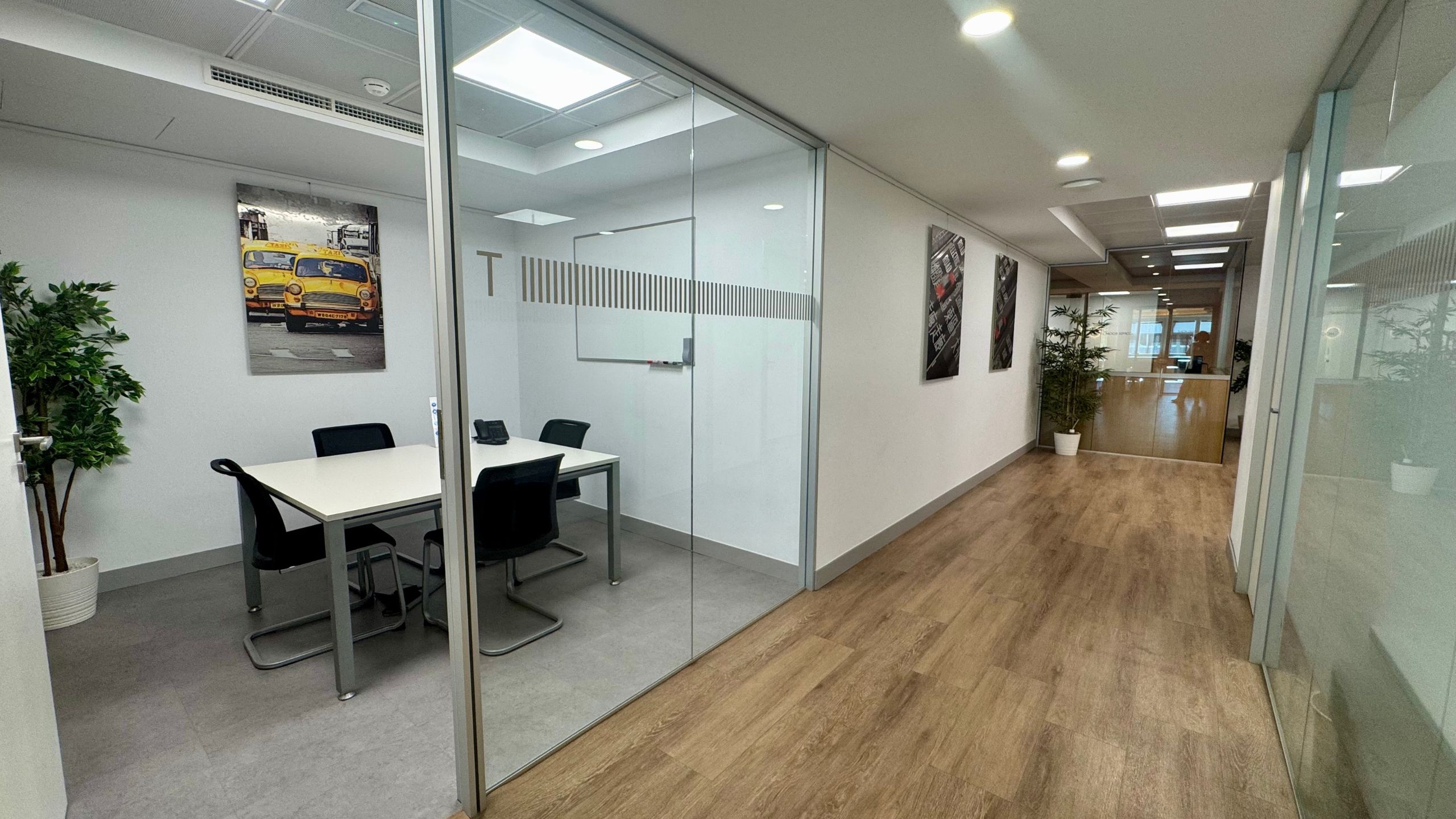
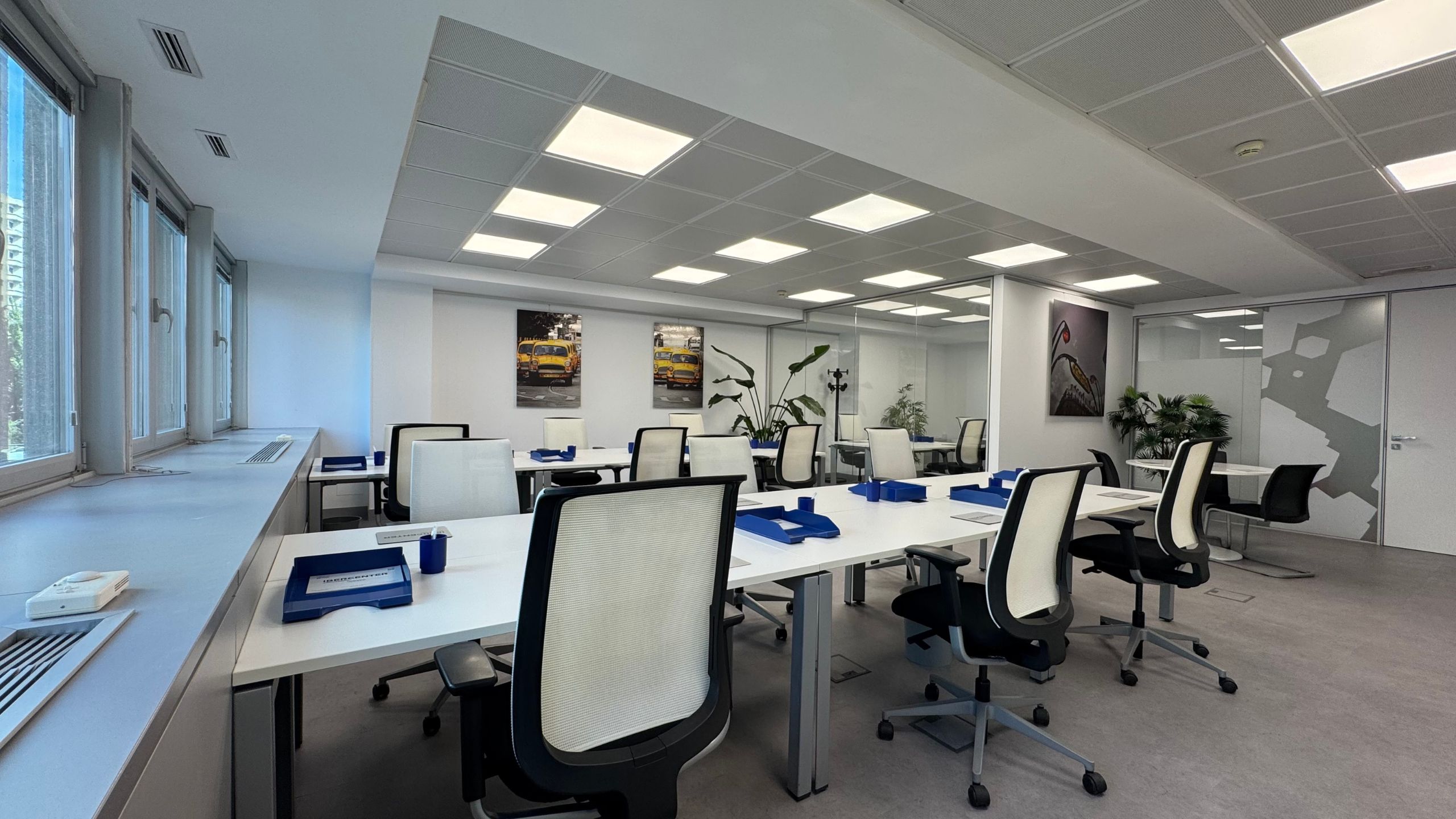
Coworking spaces, for example, have evolved significantly. They are no longer just shared tables for freelancers. Many companies now choose private offices within flexible environments, with all services included. This allows a large portion of structural expenses to be converted into a predictable monthly fee — with no initial investment, no renovations, no furniture, and no unnecessary commitments.
When analysing how to reduce fixed costs, it’s important to consider everything a traditional office entails: deposit, equipment, utilities, maintenance, cleaning, reception staff, internet, security… These costs add up quickly. In a flexible model, many of these services are already included, simplifying financial planning and eliminating unexpected expenses.
Coworking and business centres also allow companies to adjust space as needed. If the team grows, space can be expanded. If a meeting room is needed for a specific event, it can be booked by the hour. This turns part of the structure into a variable cost — a key strategy when reducing fixed expenses.
Another essential aspect is image. Working from home may be a temporary solution, but it doesn’t always convey the professionalism some clients expect. Having a well-located address, personalized phone answering, and meeting-ready spaces builds trust and strengthens the brand — all without the cost of a traditional office.
At Ibercenter, we see it every day: companies looking to reduce fixed costs discover they don’t need more space — they need a smarter model. A flexible environment with included services and adaptable contracts allows them to maintain a strong image while optimizing every euro invested.
Because in the end, the key isn’t having more square meters, but having the right space, at the right time, with the right structure. Reduce costs, yes — but always while projecting the professionalism your business deserves.
Outsource Strategic Services
When analysing how to reduce fixed costs, outsourcing certain services can have a major impact — yet it’s often overlooked. Not everything needs to be handled internally to work well. In many cases, outsourcing is synonymous with efficiency.
Maintaining administrative staff, receptionists, phone operators, or technical maintenance in-house can represent a significant monthly burden. And it’s not just salaries — it’s social security contributions, vacations, replacements, training, and internal management. That’s why understanding how to reduce fixed costs in a company means identifying which functions are truly strategic and which can be delegated without sacrificing quality.
Outsourcing tasks such as phone answering, mail handling, visitor reception, or occasional administrative support allows companies to maintain a professional image without assuming the full cost of internal hiring. These tasks are necessary, yes, but they do not always require a permanent structure.
Technological services are another area where outsourcing is highly effective. IT support, equipment maintenance, network management, or cloud solutions can be contracted on demand, avoiding large investments in infrastructure and technical staff. This transforms structural expenses into adaptable costs aligned with real business growth.
At Ibercenter, we see that many companies seeking to reduce fixed costs discover they don’t need to internalize every service to offer a professional experience. Accessing reception, personalized phone answering, equipped meeting rooms, or administrative support without adding to payroll results in significant savings and improved operations.
Furthermore, outsourcing provides flexibility. If the workload increases, the service can be expanded. If it decreases, it can be adjusted. This adaptability is essential in changing business environments, where rigidity can become a problem.
Optimize Utilities and Energy Costs
When analysing how to reduce fixed costs in a company, utilities are often considered unavoidable expenses. Electricity, climate control, water, internet… they are part of daily operations and, precisely because of that routine, they are often not reviewed with the attention they deserve. However, there may be far more room for optimization than it seems.
Understanding how to reduce fixed costs in a company means periodically reviewing energy contracts. Many companies keep the same tariff for years without checking whether the contracted power is appropriate or whether more competitive options exist in the market. Adjusting electrical capacity to real needs or renegotiating conditions can lead to significant savings without affecting operations in any way.
Energy efficiency is another key factor. Small decisions such as replacing traditional lighting with LED technology, installing timers, or improving thermal insulation can sustainably reduce monthly consumption. It’s not about making large investments, but about applying gradual improvements that have a medium- and long-term impact. These actions are part of a smart strategy for reducing fixed costs in a company without compromising comfort or productivity.
Climate control is one of the biggest drivers of consumption. Properly regulating temperature, performing preventive maintenance, and avoiding energy loss can make a noticeable difference. In many cases, the issue isn’t the price of the supply but inefficient use of available resources.
It’s also important to review telecommunications contracts. Internet, landline, and mobile services are often bundled into packages that don’t always match the company’s current needs. Eliminating unnecessary lines, optimizing data plans, or consolidating services can significantly reduce the monthly bill. When looking at how to reduce fixed costs in a company, every detail matters.
Another relevant aspect is monitoring. Tracking consumption through monitoring tools helps detect anomalies and correct them early. An unexpected increase in the electricity bill, for example, may indicate a technical issue or inefficient usage that should be addressed promptly.
At Ibercenter, we are well aware that efficient management of utilities is part of responsible business operations. Many companies exploring how to reduce fixed costs discover that it’s not always necessary to cut structure or limit human resources; sometimes, it’s enough to optimize what they already have.
Moreover, efficient management of utilities not only impacts the bottom line but also enhances corporate image. More and more clients value companies committed to sustainability and responsible consumption.
Digitize Processes to Reduce Structural Costs
If there is one clear lever when discussing how to reduce fixed costs in a company, it is digitalisation. It is not simply a matter of adopting technology because it is fashionable, but of using it wisely to streamline processes, eliminate repetitive tasks and reduce unnecessary structure.
Many companies still operate with traditional methods: physical files, manual processes, paper invoicing or in‑person signatures for internal procedures. All of this requires time, space and human resources dedicated to tasks that can now be automated. This is why understanding how to reduce fixed costs in a company necessarily involves reviewing the organisation’s real level of digitalisation.
Electronic invoicing, for example, not only speeds up administrative management but also reduces costs associated with printing, storage and postal delivery. It also enables real‑time financial control, which is essential for making strategic decisions. When information is organised and accessible, management becomes more efficient and errors that may lead to additional costs are minimised.
Digital signatures are another key tool. They eliminate the need for travel, speed up agreements and shorten turnaround times. Instead of relying on in‑person processes, the company gains agility and productivity. These types of solutions fit perfectly into any strategy aimed at reducing fixed costs, as they reduce the need for physical infrastructure and optimise the team’s time.
Cloud storage also helps reduce structural costs. Maintaining in‑house servers requires initial investment, technical maintenance and the risk of potential failures. With cloud solutions, the company pays for what it uses, scales according to its needs and avoids infrastructure‑related expenses. Once again, the goal is to turn fixed costs into variable ones.
In addition, automating administrative tasks — such as appointment management, access control, customer service through digital tools or internal project organization — allows the team to focus on higher‑value activities. Reducing operational workload does not mean dispensing with talent; it means freeing up time for strategic work.
At Ibercenter, we see that many companies looking to reduce fixed costs discover that the key is not only renegotiating contracts but modernising the way they work. Digitalising processes not only improves efficiency but also enhances a company’s image, making it appear more modern and competitive to clients and partners.
When applied correctly, digital transformation simplifies structures, reduces dependence on physical resources and increases flexibility. And in a business environment where agility is essential, that flexibility makes all the difference.
Turn Fixed Costs into Variable Costs
One of the most effective approaches when analysing how to reduce fixed cost in a company is to shift the perspective: rather than eliminating costs, transform them. Moving from a rigid structure to a flexible model can make a significant difference in the profitability of the business.
Fixed costs have a clear characteristic: they must be paid every month, regardless of activity levels. Variable costs, on the other hand, adjust according to actual usage. This is where many companies find a practical answer to how to reduce fixed costs without affecting their day‑to‑day operations.
A very clear example is meeting space. Maintaining an underused meeting room for most of the month means taking on square metres, furniture, climate control and maintenance that generate very little value. In contrast, opting for on‑demand meeting room hire in Madrid allows you to pay only when it is genuinely needed. In this way, the cost ceases to be structural and becomes occasional and controlled.
The same applies to additional workstations. Instead of renting an oversized space “just in case”, many companies choose to expand or reduce according to their needs at any given time. This adaptable model aligns perfectly with the logic of reducing fixed costs, as it avoids unnecessary commitments and improves financial forecasting.
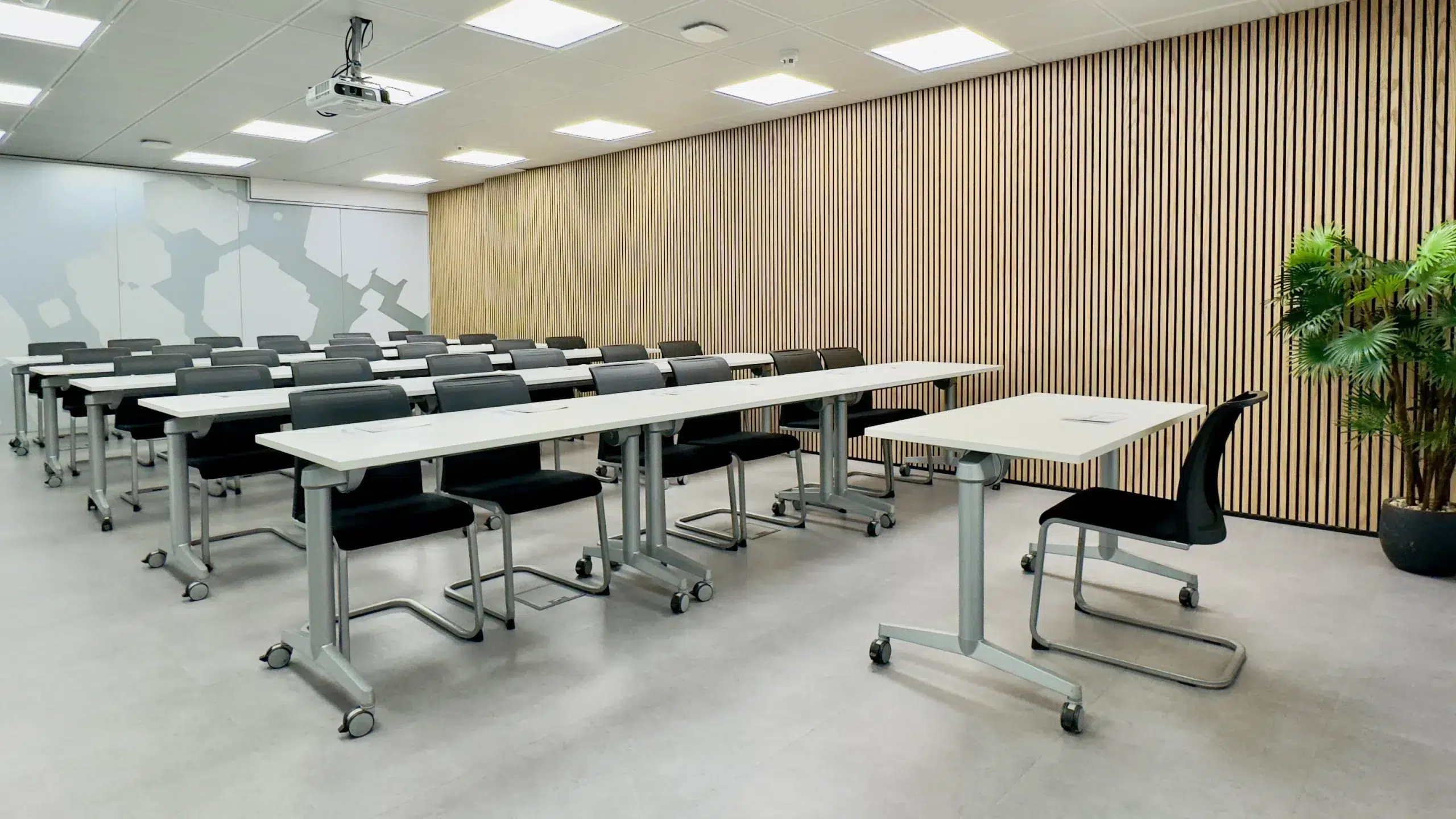
Turning fixed costs into variable ones also involves reviewing complementary services. For example, hiring administrative support by the hour, using private offices only on certain days, or accessing training rooms when there is a specific need. This flexible mindset allows companies to maintain a lean structure without losing operational capacity.
Moreover, this approach reduces risk. In periods of lower activity, expenses adjust automatically. During growth phases, the company can increase resources without having to make large upfront investments. This ability to adapt is essential when seeking to reduce fixed costs without limiting future development.
At Ibercenter, we work precisely with this philosophy: offering solutions that allow companies to scale their space and services according to their actual needs. Not every stage requires the same structure, and taking on unnecessary costs can hinder strategic decision‑making.
The Coworking Option
When a company considers how to reduce fixed costs, one of the most effective and strategic alternatives is to opt for a coworking space or flexible solutions within a business centre. It is not merely about sharing space, but about optimising resources without compromising professionalism.
The traditional office model forces companies to take on a series of structural expenses: long‑term rent, deposit, furniture, utilities, maintenance, reception, cleaning, internet, security… All of this makes the workspace one of the main monthly fixed costs. For this reason, many companies analysing how to reduce fixed costs discover that real savings do not come from cutting back, but from changing the model.
Modern coworking has evolved significantly. It is no longer just an open space with shared desks; today it offers solutions tailored to every type of business. From flexible desks to private offices, as well as meeting rooms, training rooms and fully customised spaces. This versatility allows companies to adjust the size and services according to their actual business needs.
At Ibercenter, we have been supporting companies in Madrid for more than 25 years, and we know that every project requires something different. That is why we offer multiple options: coworking spaces for professionals seeking flexibility, private offices for teams requiring greater confidentiality, and tailored offices for companies wanting an exclusive image without taking on initial investment.
Our model provides a practical understanding of how to reduce fixed costs in a company. There is no need for large upfront payments or rigid contracts that limit adaptability. In addition, all our spaces include services that, in a traditional lease, would represent additional expenses: professional reception, personalised telephone answering, 24‑hour access, fully equipped rooms and administrative support.
Another key aspect is image. Working in a well‑maintained environment, in strategic locations and with infrastructure prepared to receive clients, enhances credibility and strengthens the brand. And most importantly: all of this can be achieved without the workspace becoming a financial burden.
Many companies that come to us looking for ways to reduce fixed costs discover that coworking and flexible offices not only lower expenses but also improve efficiency and organisation. They pay only for the space and services they genuinely need at each stage of their growth.
Conclusion
Reducing costs should never be an impulsive decision, but a strategic one. Understanding how to reduce fixed costs in a company means analysing the structure with a broad perspective, questioning rigid contracts, optimising utilities, digitalising processes and embracing flexible models that allow the business to adapt at every stage. It is not about cutting for the sake of cutting, but about building a more efficient, sustainable financial foundation that is ready to grow.
In our coworking spaces in Madrid, we see it every day: the companies that profoundly move forward are those that turn flexibility into a competitive advantage. Knowing how to reduce fixed costs in a company is about managing intelligently, prioritising resources and focusing on what really matters — growing the business without unnecessary burdens. When the structure supports you, growth comes with greater strength and peace of mind.